What flood damage means
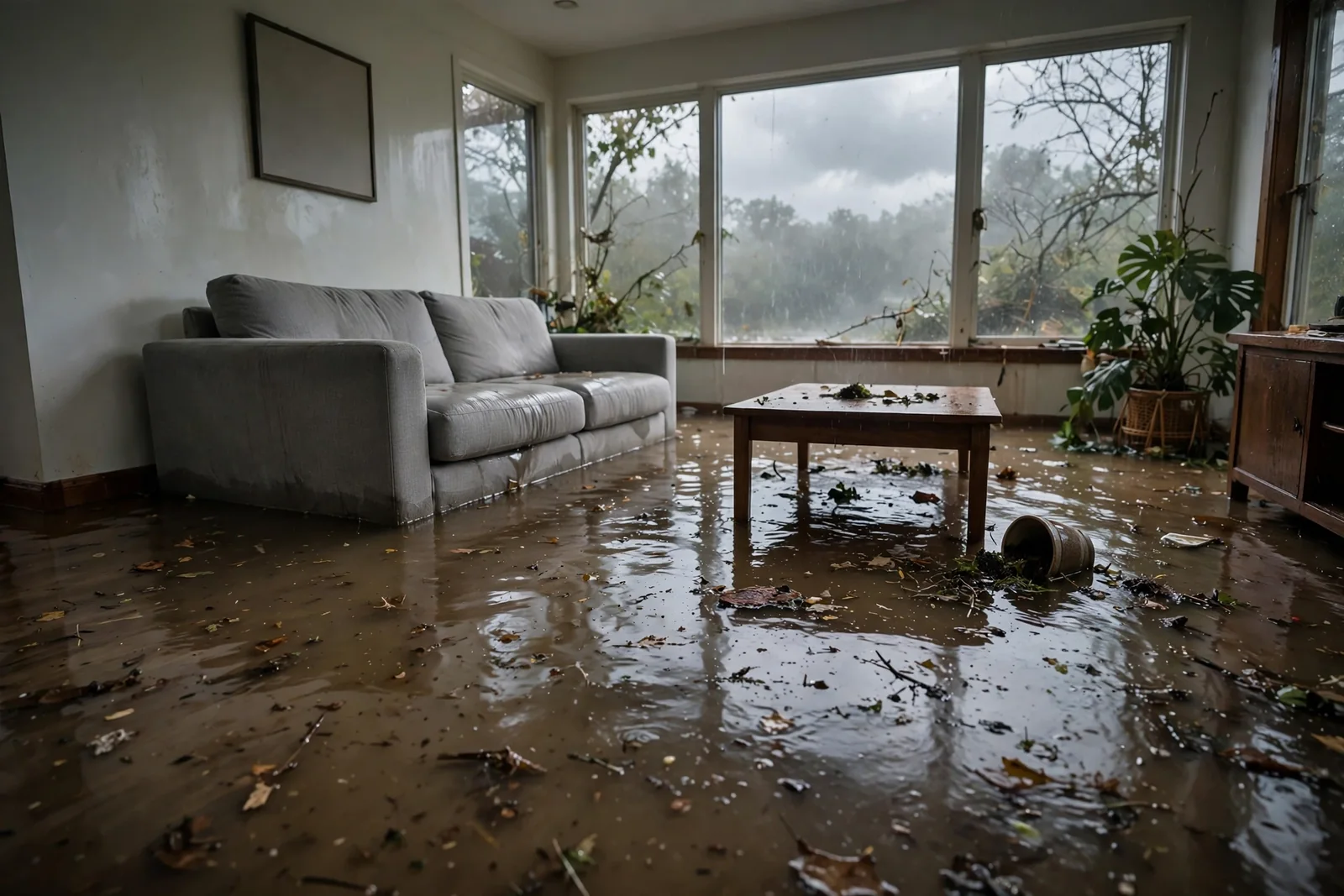
Flood damage is harm caused by water that came in from outside the home. Unlike a burst pipe, which releases water from a known clean source, flood water travels across soil, pavement, and landscaping before it enters. Along the way it picks up grit, bacteria, and chemicals, which is why flood cleanup service work follows stricter handling than a plain leak cleanup.
Under the IICRC S500 standard, water is sorted into categories by contamination. Clean supply-line water is Category 1. Water with some contamination is Category 2. Sewage and heavily contaminated water is Category 3. Flood water from outdoors is generally treated with Category 2 or 3 caution, depending on what it crossed and how long it sat.
The damage is also wider than the puddle you can see. Water wicks into drywall and insulation, runs under tile and laminate, and soaks the subfloor. A room that looks merely wet at the surface can hold moisture in the wall cavity for a long time if it is not opened up and dried with readings to guide the work.
How flood water gets into Boca Raton homes
Boca Raton sits in flat, low South Florida terrain with a high water table, so heavy rain can overwhelm drainage quickly. Common entry routes on flood calls include:
- Standing rainwater pooling against doors, sliders, and garage entries until it seeps inside.
- Canals, swales, and saturated ground pushing water toward the lowest openings in the home.
- Clogged gutters and downspouts dumping roof water against the foundation wall.
- Storm surge and driving rain during named storms and tropical systems.
- A nearby pipe, main, or irrigation failure sending outside water across the lot.
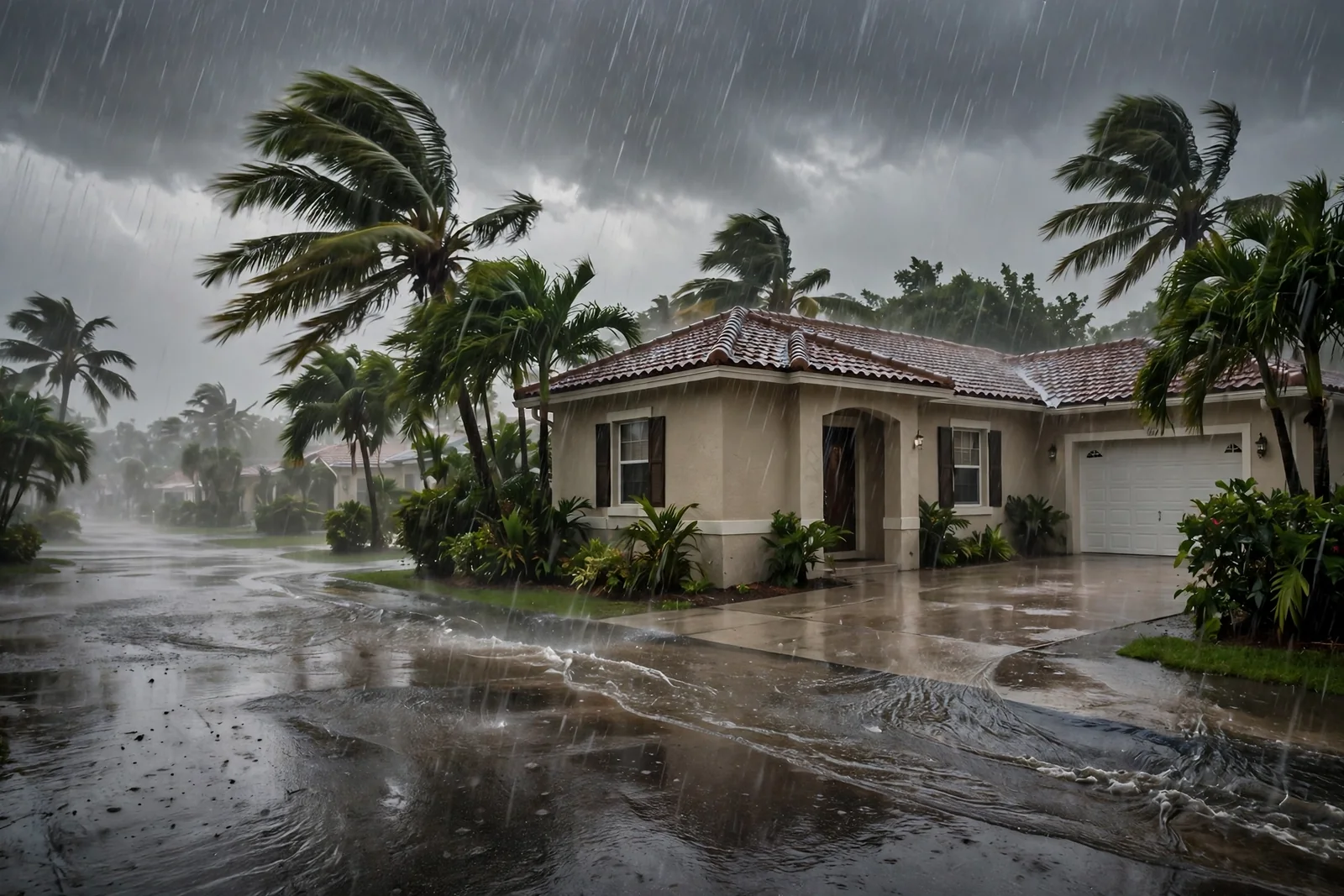
Real situation: after an afternoon storm, the water line on a Boca back patio rises past the slider track, and the living room tile is under an inch of brown water. The visible water is only part of it. The baseboards and the lower wall are already wicking it up.
| What you see | Likely source | Safe check | When to call |
|---|---|---|---|
| Brown water coming under a door or slider during a storm | Rainwater pooling outside and entering at the threshold | From inside, note the depth and which rooms it has reached | As soon as water is inside and spreading |
| Water rising through floor joints or grout lines | High water table pushing up through the slab area | Move dry belongings off the floor in that room | Any time water appears without a visible entry point |
| Damp carpet and a musty smell a day after rain, no standing water left | Flood water that entered and receded, leaving soaked padding and wall bases | Press a paper towel at the carpet edge and check for moisture | Before the smell grows, moisture is still active inside |
| Water near outlets, a breaker panel, or appliances | Any flood source, now an electrical risk | Do not touch anything electrical from inside the water | Immediately, before anything else |
Safety first: when to stop
Flood water is treated as contaminated, and standing water changes what is safe to touch. A few checks are safe. Stop there in these cases.
Safe checks you can do
- Shut the main water valve — only if you can reach it without standing in water.
- Move dry belongings out of the wet zone, without crossing the water.
- Take photos of the damage for your records.
Stop, and call instead
- Keep out of standing water near outlets, appliances, or a breaker panel.
- Never touch or work in flood water with bare hands.
- Stay out of basements and crawl spaces — where they exist, a flooded below-grade space is a professional-only job.
- If you smell gas or a carbon monoxide alarm sounds, leave the home and call the gas utility or 911.
What a professional generally does on a flood job
Every flood job is scoped at the home, but the general order is consistent. On the call, describe how the water got in, how deep it is, and what it touched, and the professional can explain the first moves for your situation.
General information only. It does not replace the professional’s assessment at your home.
1. Safety and source check
The first check is whether the water is still coming in and whether electrical risk is present. If outside water is still rising, the plan waits on safety, not on equipment.
2. Water removal
Standing flood water is pumped and extracted out of the home. Because it is treated as contaminated, the water and the debris it carried are handled and disposed of accordingly, not drained into the home’s plumbing as a matter of course.
3. Sorting materials
Porous materials that flood water soaked, like carpet padding, lower drywall, and upholstered items, are usually removed because they cannot be cleaned to a safe standard. Hard surfaces are cleaned and disinfected. The sorting is explained item by item, not assumed.
4. Contained drying
Air movers and dehumidifiers dry the structure. Where flood water entered wall cavities, containment may be used so the work area stays separate from clean rooms while drying runs.
5. Moisture checks
Readings are taken as drying progresses. The job is done when materials reach a dry standard measured against unaffected parts of the home, not when surfaces simply feel dry.
Flood water inside right now? Keep out of it, and talk it through on one call.
Call NowWhy flood water is handled differently
Homeowners sometimes ask why a flood job costs more effort than a clean pipe leak. The reasons are contamination and reach. Flood water is assumed dirty, so protective handling, disposal, and disinfection are part of the work. Porous materials that soaked it generally cannot be salvaged, which changes the scope. And because water entered from outside, the drying plan has to account for wall bases and flooring edges that drank it in beyond the visible line.
Mold is the other reason for pace. The EPA notes mold can begin growing on wet surfaces within 24 to 48 hours. Flood water that sits, or materials left damp after it recedes, give mold exactly the conditions it needs. A flooded home that is dried within the first day or two is a smaller job than the same home left wet for a week.
What to ask a flood contractor
- Please confirm the license and insurance the job requires in Florida.
- How do you handle contaminated water and disposal?
- Which materials do you expect to remove rather than dry?
- Do you follow IICRC S500 methods?
- How will clean rooms be kept separate from the work area?
- Can the scope and any warranty terms be put in writing?
Clear answers are a good sign. Vague answers are useful information too. Keep notes from the call.
Covered Boca Raton ZIP codes
Calls are matched for homes in Boca Raton, FL, in Palm Beach County, within these covered ZIP codes:
- 33428
- 33431
- 33432
- 33433
- 33434
- 33486
- 33487
- 33496
- 33498
Flood calls are matched inside Boca Raton only, so the professional you reach covers your area. See the service areas page for how matching works.
Frequently Asked Questions
A leak usually starts inside the home, from a pipe, appliance, or roof. Flood damage comes from water entering from outside, like heavy rain, rising groundwater, or storm surge. Outside water picks up soil, debris, and contaminants on its way in, so it is handled with more caution than clean water from a supply line.
It can. Flood water is treated as contaminated because it may carry bacteria, chemicals, and debris from outdoors. That is why the safe approach is distance: keep people and pets out of flooded rooms, avoid contact with the water, and let a professional handle removal, cleaning, and disposal of materials the water soaked.
Stay out of the water, especially near outlets, appliances, or a breaker panel. If you can reach the main water valve or a breaker without standing in water, you may shut it off. Move dry belongings to a dry room if you can do it without crossing the water. Take photos for your records, then call and describe what you see.
It can. Water spreads under flooring and wicks into wall bases, so a flooded room often means damp material beyond the visible edge. Humidity also rises through the whole home while water sits. A moisture check maps how far the water actually traveled, which is why drying plans are based on readings rather than the visible waterline.
Porous items that flood water soaked, like upholstered furniture, mattresses, and cardboard, usually cannot be cleaned safely and are typically removed. Hard, non-porous items can often be cleaned and disinfected. When you call, describe what the water touched, and ask the professional how they sort what can be kept from what should go.
It depends on the depth of the water, how long it sat, and which materials it reached. Removing water is only the first step. Drying a soaked wall cavity or subfloor takes longer than drying a bare tile floor. The professional monitors moisture readings and adjusts as drying progresses, so the timeline is set by the readings, not by a guess.
You can, and the call is the right place for it. This website does not give estimates. When you call, ask the local professional how they handle estimates for flood work like yours, and what they need to see at the home before they talk numbers with you.